


The proposal
What Ramaswamy has said—and what the written plan actually does.
Sign the petition and tell your state legislators and local elected officials to REJECT Vivek Ramaswamy’s DANGEROUS plan.
Bring Ohio Back Now is a 501 (C)(4) organization dedicated to educating Ohioans about public policy proposals and their potential impact on our state.

We’re building a public record of the plans, donors, statements, and independent analysis shaping Ohio’s future.
What Ramaswamy has said—and what the written plan actually does.
Who benefits, who pays, and what Ohio communities stand to lose.
Public documents, direct quotes, and reporting you can examine yourself.
Bring Ohio Back Now believes we can build a better, brighter future for our families and communities—one vote at a time.
Get Voting Information HereProtect your family’s future:
Sign the petition…
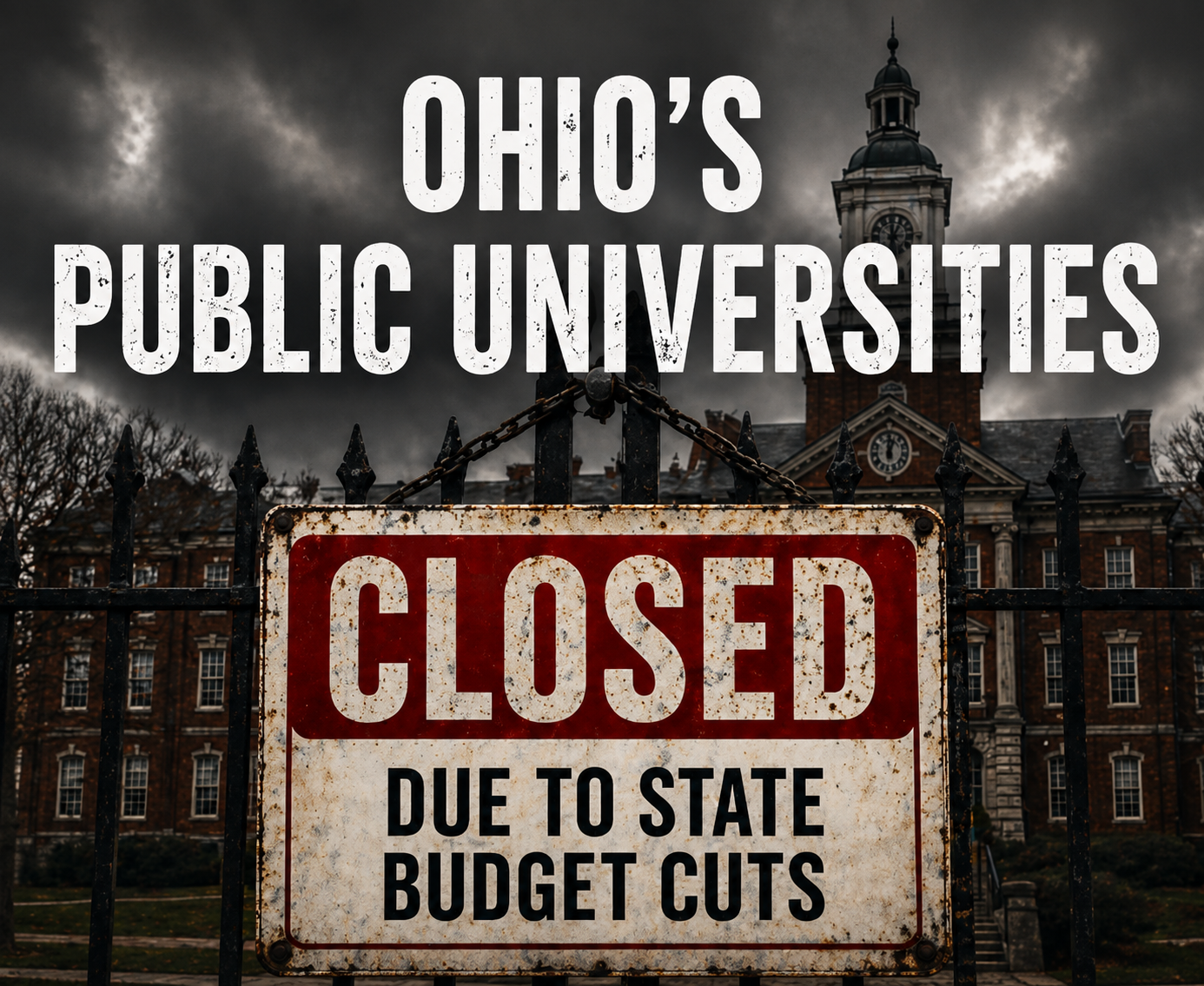
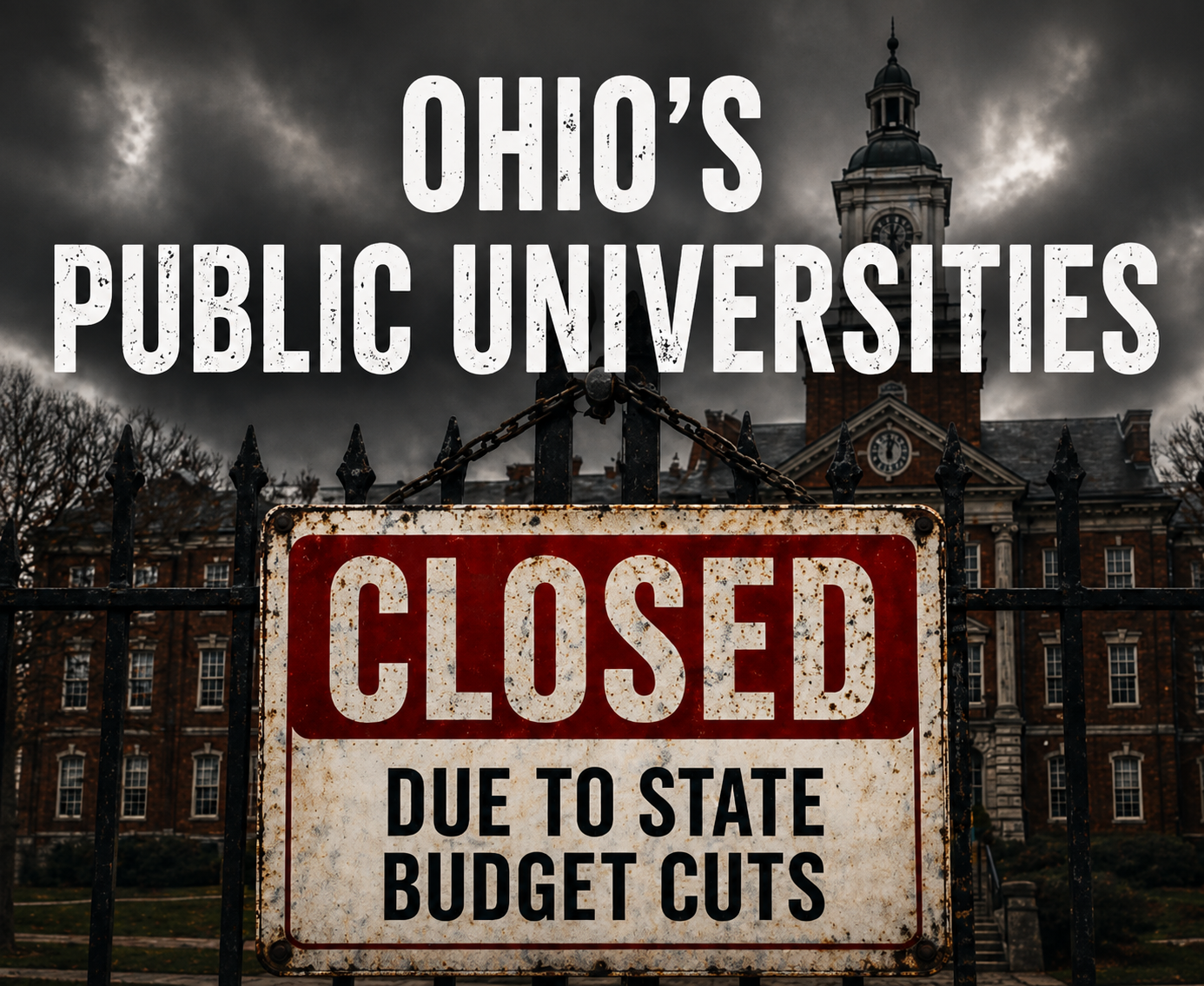
Ohio’s public colleges and universities educate our children, prepare the workers our economy needs and support hundreds of thousands of jobs. They make an affordable college education possible for students who cannot leave home or pay room and board.
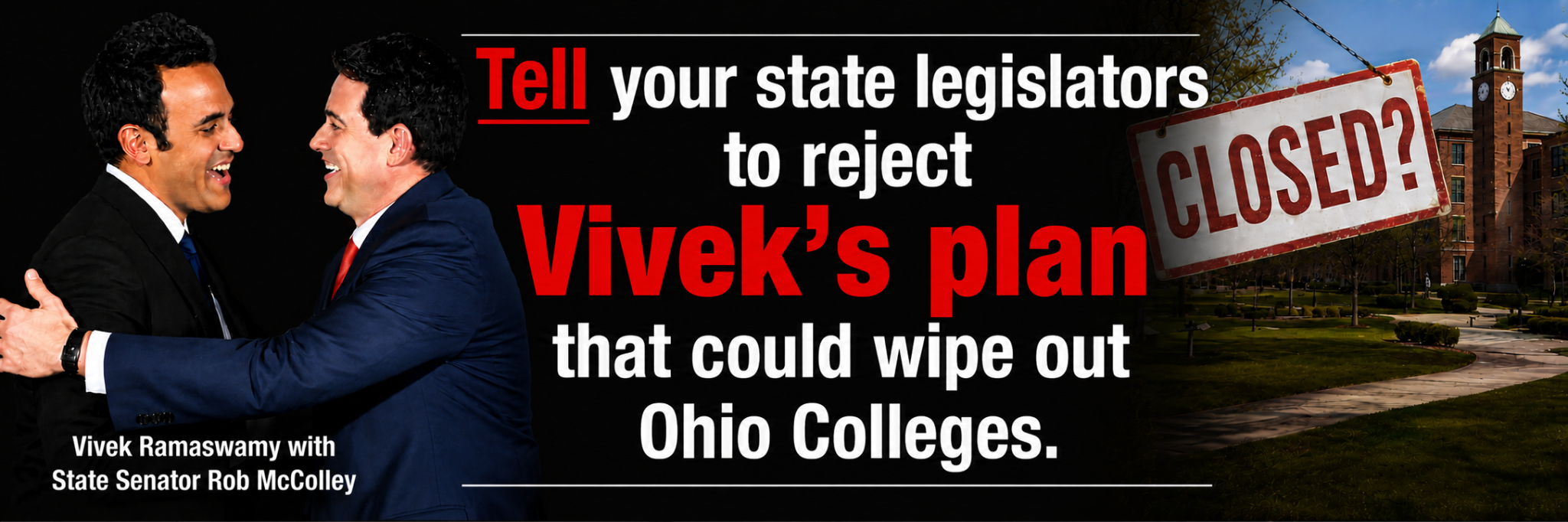
Vivek Ramaswamy says Ohio has too many public universities and suggests some should be “consolidated” to help pay for his proposed tax cuts that would benefit wealthy Ohioans—including himself. His proposal could close campuses, eliminate academic programs and deprive students of access to an affordable education close to home.
Protect Ohio’s future. Sign our petition and tell your state legislators to reject Vivek’s dangerous college consolidation plan.
On March 13, 2026, while discussing how to pay for his plan to eliminate the state’s income tax, Ramaswamy took aim at Ohio’s public colleges and universities.
“We have too many of them. They need to be consolidated.”— Vivek Ramaswamy, March 13, 2026
Two weeks later, Ramaswamy outlined his plan in a March 27 opinion column. He proposed giving the chancellor of the Ohio Department of Higher Education authority to review every publicly funded college and university and determine where declining enrollment had made an institution’s independence “untenable.”
Ramaswamy specifically cited Cleveland State University, the University of Akron, Kent State University and Central State University while discussing institutions facing enrollment, tuition or financial challenges.
Then, at an April 2026 event at Ohio State University, he doubled down:
“I don’t think you should be funding subpar universities.”— Vivek Ramaswamy, April 2026
Ramaswamy said the strongest academic programs should survive while other programs are eliminated or consolidated. That could force students to travel farther, pay room and board or abandon plans to earn a degree altogether.
After his proposal generated bipartisan opposition, Ramaswamy began denying that he wanted to close universities. He said he meant that Ohio should consolidate “duplicative” academic programs among institutions.
But his original statements were clear: Ohio has too many universities, they should be consolidated and institutions he considers “subpar” should not receive state funding.
His written proposal would still give state officials broad authority to decide whether a university should remain independent, which programs it may offer and whether its administrative functions should be absorbed by another institution.
Whether Ramaswamy closes an entire university or eliminates many of the programs that allow it to serve its region, the result could be the same: fewer educational opportunities, fewer jobs and weaker communities.
Ohio’s 14 public universities do far more than award degrees. They employ thousands of Ohioans, purchase goods and services from local businesses, attract students and visitors, conduct research and prepare the nurses, teachers, engineers, public-safety professionals and skilled workers Ohio desperately needs.
A study commissioned by the Inter-University Council of Ohio estimated that the state’s public universities generated $68.9 billion in economic impact during the 2021–2022 fiscal year—equal to 8.8% of Ohio’s gross state product. The study found that university activities, students and graduates supported approximately 866,782 jobs—one out of every eight jobs in Ohio.
The study also estimated that Ohio receives approximately $4.60 in additional tax revenue and public savings for every dollar taxpayers invest in public-university education.
Closing or weakening a public university would not merely affect students and professors. It could cost communities jobs, reduce spending at local businesses, weaken the available workforce and make it harder for employers to find qualified workers.
In July 2026, Scioto Analysis surveyed a panel of Ohio economists about reducing the number of public universities in the state.
University of Toledo economist Kevin Egan warned that closing a local public university would prevent some commuting students from attending college and reduce the number of valuable workers entering Ohio’s economy.
Governor Mike DeWine has said he opposes consolidating Ohio’s colleges or eliminating any of the state’s 14 public universities.
“It’s important to have them all over the state.”— Governor Mike DeWine
DeWine noted that many students cannot afford to move away or pay room and board and must commute to college.
Republican State Senator Jerry Cirino, chair of the Senate Finance Committee and a leading architect of Ohio’s recent higher-education legislation, questioned Ramaswamy’s understanding of the system, saying: “I don’t know how much he knows about how higher ed works in the state of Ohio.”
Cleveland State University President Laura Bloomberg has said Ohio must honor the identities of public universities created to meet the needs of their regions and that institutions can cooperate and become more efficient without being consolidated.
Kent State University President Todd Diacon defended Ohio’s investment in public higher education, writing:
“This was not a waste. This was Ohio investing in itself.”— Todd Diacon, President, Kent State University
Our public colleges and universities belong to the people of Ohio. Decisions about their futures should not be based on political slogans, an undefined standard of which schools are “subpar,” or an attempt to finance tax cuts that disproportionately benefit the wealthy.
Ohio should strengthen its public colleges and universities—not close campuses, eliminate essential programs or put affordable degrees beyond the reach of working families.
Stand with Ohio’s students, educators, workers, employers and college communities. Sign our petition and tell your state legislators to reject Ramaswamy’s dangerous plan.
News and Updates
A survey of Ohio economists found broad concern about consolidating public universities. Most respondents said reducing the number of universities would hurt long-term economic output and educational attainment.
Read the StorySignal Ohio reports that billionaire Jeffrey Yass has poured at least $30 million into a super PAC supporting Ramaswamy. The total exceeds what Amy Acton had reported raising for her campaign at the time of publication.
Read the Story NBC4Governor Mike DeWine disputed a Ramaswamy campaign ad’s account of the 2020 primary-election postponement. He said the claim that Amy Acton closed the polls was inaccurate.
Read the Story
Bring Ohio Back Now. VOTE
Check your registration, learn how to vote early, and find the dates and deadlines you need to make your voice heard.
Visit the voting page